Cold Storage Is a Different Solar Problem: Refrigerated Facilities, Load Profiles, and Storage
Refrigerated warehouses run heavy loads around the clock. That changes how solar and battery storage should be sized and controlled for a cold storage facility.
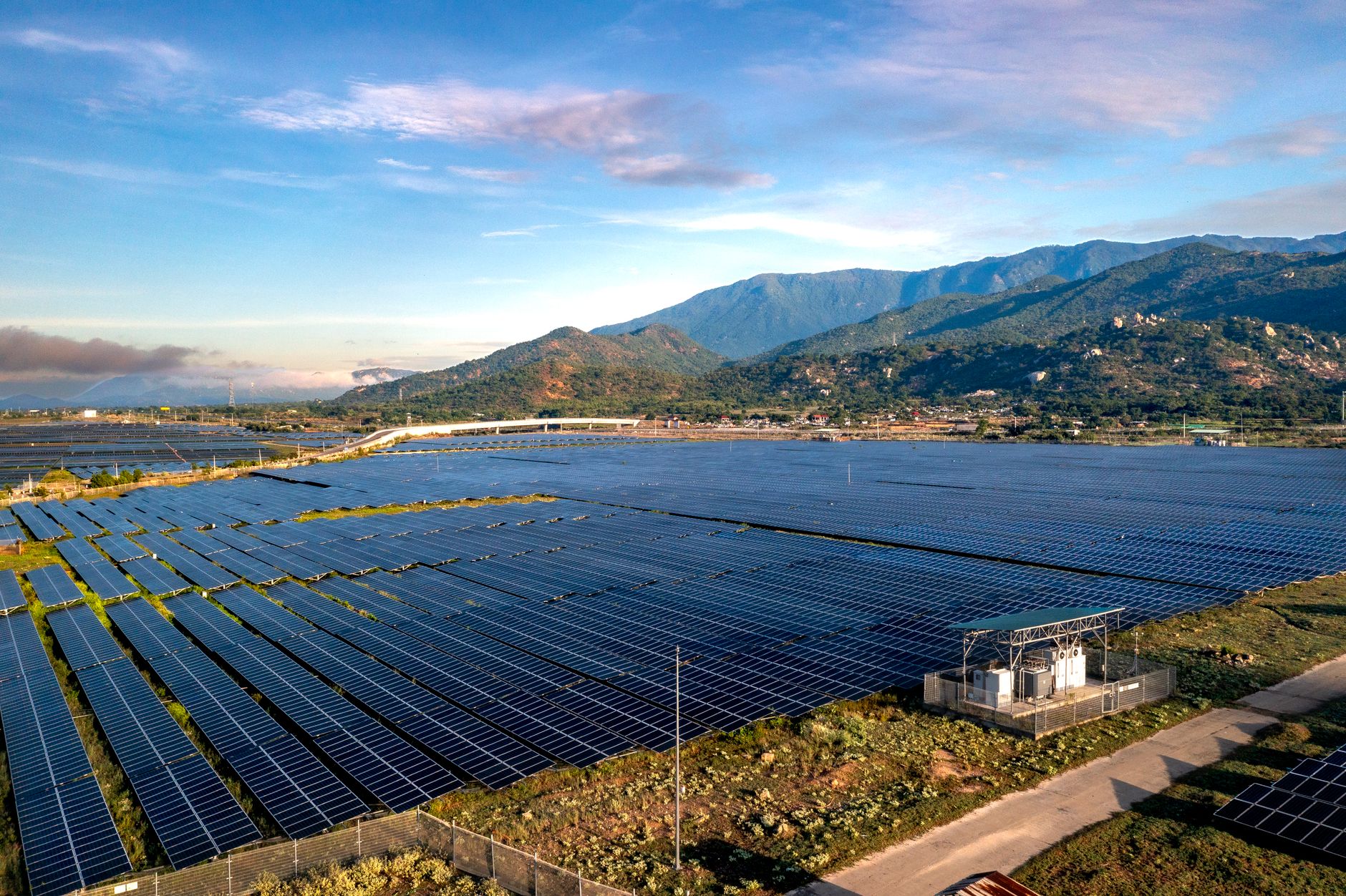
Photo: Quang Nguyen Vinh / PexelsMost commercial solar guidance assumes a building that uses power during the day and goes quiet at night. Offices, retail, light manufacturing on a single shift. For those facilities, a solar array lines up reasonably well with the load, and the design conversation is relatively straightforward.
Cold storage does not work that way, and treating a refrigerated facility like a generic warehouse produces a system that underperforms against the bill.
## What makes the load profile different
A refrigerated facility runs compressors continuously. Not on a schedule tied to occupancy — on a schedule tied to thermal load, ambient temperature, product turnover, and how often the dock doors open. The building draws meaningful power at 2 p.m. and at 2 a.m.
Three consequences follow from that.
**Your consumption extends well past sunset.** A solar-only system sized to your daytime load leaves a large overnight draw untouched. Under current California net billing rules, exporting midday and buying back overnight is not the trade it once was.
**Your demand charges are driven by equipment cycling, not occupancy.** Compressor starts, defrost cycles, and simultaneous equipment operation create peaks that have nothing to do with whether anyone is in the building. Peaks can land at times a generic load analysis would not predict.
**Summer is compounding.** Ambient heat raises your cooling load at exactly the time grid rates are highest and utility peak periods are most expensive. The load and the price move in the same direction.
That third point is why cold storage facilities often see energy costs that feel disproportionate to their square footage.
## Why storage usually matters more here
For a lot of commercial buildings, battery storage is a worthwhile addition. For cold storage, it frequently moves from optional to central.
Storage lets you charge during high solar production and discharge into evening and overnight load rather than exporting at a low compensation rate. It also gives you a tool for shaving demand peaks created by compressor cycling — which, on a facility with substantial demand charges, can represent a large share of the savings.
The sizing question is genuinely different from a standard commercial project. You are not sizing storage against a daytime shortfall. You are sizing it against a round-the-clock load with predictable equipment-driven peaks, and the control strategy matters as much as the capacity.
## Resilience is a real line item, not a nice-to-have
For most businesses, a grid outage is an inconvenience. For a refrigerated facility, it is a countdown against product value.
That changes the economics of backup power. A microgrid configuration — solar, storage, and controls capable of islanding — protects inventory that may be worth more than the system. Facilities carrying high-value or temperature-sensitive product often find that the resilience case, rather than the utility savings case, is what makes the project make sense.
Worth being precise here: not every battery installation provides backup. Whether a system can carry load during an outage depends on how it is designed and configured, and backing up full refrigeration load is a materially different design than backing up a few critical circuits. If outage protection matters to you, it needs to be a design requirement from the start, not a question asked at commissioning.
## Roof space and the practical constraints
Cold storage buildings often have large flat roofs, which sounds ideal. Two complications show up regularly.
**Rooftop refrigeration equipment consumes space and creates shading.** Condensing units, penthouses, and associated piping reduce usable area and cast shadows that a naive layout will ignore.
**Roof assemblies may be different.** Refrigerated buildings sometimes have insulation and vapor barrier assemblies that affect how solar can be attached. This belongs in the roof assessment before design is finalized.
Ground mount or carport arrays are worth evaluating for facilities where roof area is genuinely constrained by equipment.
## What we would want to see before designing anything
For a refrigerated facility, a credible design starts with interval data — not a single monthly bill. Twelve months of interval consumption shows when your peaks actually occur, how they vary seasonally, and what your overnight baseline looks like. Without it, storage sizing is guesswork.
We would also want to understand your operational pattern: shift schedule, dock activity, product turnover, and whether your load is expected to grow. A facility planning to add capacity in two years should not be designed against today's consumption.
## The short version
If you run a refrigerated facility in the Inland Empire, Temecula Valley, or anywhere across Southern California, your energy profile is one of the harder commercial cases to design well — and one where a well-designed system can move the needle furthest, precisely because your consumption is so large and so constant.
The mistake is buying a system sized like an office building's. The fix is starting with your actual interval data and designing solar, storage, and controls as one system rather than as an array with a battery added to it.
We handle the load analysis, design, permitting, installation, and ongoing maintenance under one roof, which matters more on a facility like this than on a simpler building — because the controls strategy that makes the economics work has to survive past commissioning.
If you want a read on what your load data actually shows, that is a conversation we are glad to have.